


By Nick Tubach, MBA, PCC — President and Co-Founder, Bridgeline Coaching Last updated: May 2026 · Reading time: 6 minutes
Leadership today can feel like navigating a ship through a hurricane while managing a crew that speaks different languages. The pace is relentless. The stakes are unforgiving. And the old “command and control” playbook is failing the executives who still rely on it.
The alternative has a name: leading from the inside out. It’s the discipline of developing your own self-awareness, emotional regulation, and personal clarity before asking your organization to follow you anywhere new. And according to a recent McKinsey interview with the authors of The Journey of Leadership: How CEOs Learn to Lead from the Inside Out — Dana Maor, Hans-Werner Kaas, Kurt Strovink, and Ramesh Srinivasan — it has quietly become the defining capability of CEOs who actually sustain performance over time.
Their insights, drawn from the Bower Forum’s work with more than five hundred global CEOs, line up with what I see every week in my own coaching practice. Leading from the inside out is no longer a luxury — it is the foundation of sustainable business transformation.
What Does Leading from the Inside Out Mean?
Leading from the inside out means developing self-awareness, emotional regulation, and personal clarity before attempting to lead others. The premise is straightforward: you cannot guide an organization through change you have not navigated within yourself first.
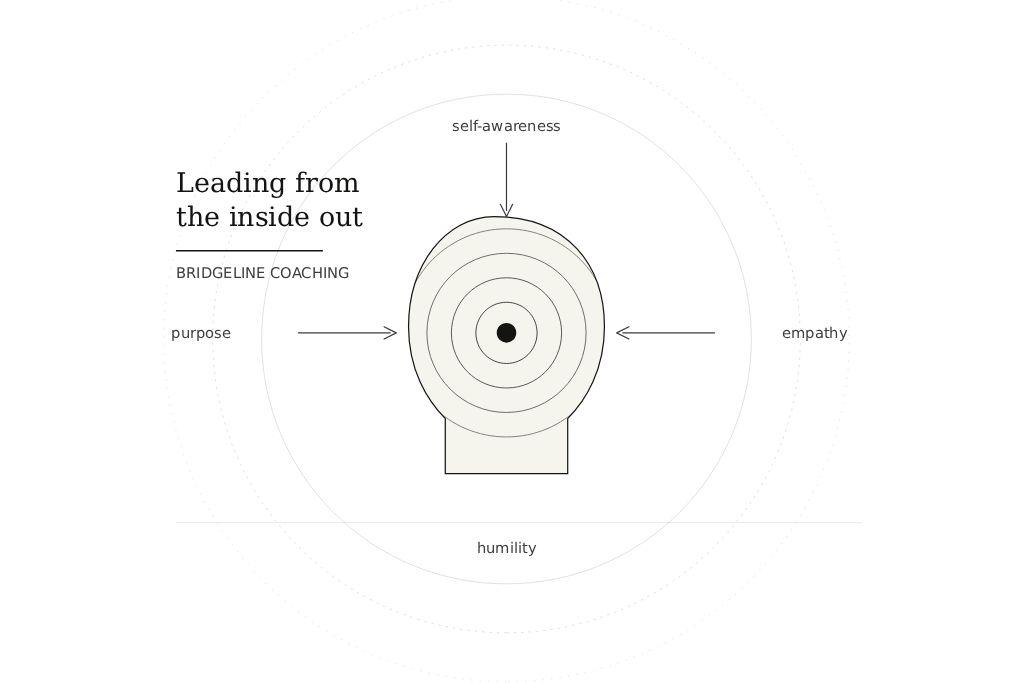
McKinsey’s research frames the same idea through what the authors call human-centric leadership — the practice of leaders showing up as actual human beings, with mastery of four deeply human capabilities: purpose, empathy, self-awareness, and humility. The two terms describe the same shift in approach from different angles. Leading from the inside out is the process; human-centric leadership is the result others experience.
In my coaching practice, I see executives constantly battling the tension between driving bottom-line execution and fostering a collaborative culture. The McKinsey authors are right when they argue that exceptional leaders must learn to lead themselves first.
You cannot guide an organization through a complex digital or cultural transformation if you lack the self-awareness to acknowledge your own biases and blind spots. Courage, curiosity, and continuous self-learning are what allow executives to move beyond outdated command-and-control behaviors and lead through genuine influence instead.
Isn’t “Soft” Leadership Too Soft for Real Business?
A common pushback from seasoned executives goes like this: “Empathy, self-reflection, emotional intelligence — that’s all too soft for the cutthroat reality of running a business. Time spent on introspection is time stolen from hitting quarterly targets.”
I understand the instinct. The evidence from McKinsey’s work with hundreds of top-tier CEOs, however, points in the opposite direction.
Ignoring the human element is what stalls execution. When leaders fail to regulate their emotions or refuse to listen to diverse perspectives, they create fear-based cultures that stifle innovation and drive away top talent. The cost shows up in attrition, missed deadlines, and stalled strategy — even when the spreadsheets initially look fine.
Leaders who embrace vulnerability with strength unlock the commitment and creativity of their teams. The so-called “soft” skills are, in reality, the hardest to master. They are also the precise capabilities that generate long-term financial resilience.
How Busy CEOs Lead from the Inside Out: The Power of Microhabits
The natural next question is practical: how does a busy CEO actually implement any of this?
You cannot overhaul your leadership persona overnight — but you can change how you respond in specific moments. The McKinsey interview highlights the compounding power of microhabits, and this is where the work becomes doable.
Four microhabits worth borrowing:
The “Prussian night.” When something frustrating happens, hold the emotional response for twenty-four hours. Sleep on it. Then decide how to react.
The fifteen-minute pause. Block a short window between back-to-back meetings to reflect rather than ricochet.
The daily intention. Set one clear intention each morning before opening your inbox.
The personal advisory board. Identify three to five trusted colleagues and truth-tellers who will give you honest, objective feedback — not validation.
Small, deliberate practices compound. Over months, they reshape how you show up under pressure. In my coaching work, building a personal advisory board is often one of the most lasting changes a leader makes.
FAQs
What does “leading from the inside out” mean?
“Leading from the inside out” means developing self-awareness, emotional regulation, and personal clarity before attempting to lead others.
The premise is straightforward: you cannot guide an organization through change you have not navigated within yourself first. A leader who has not done the inner work of understanding their own biases, triggers, and blind spots will project those unresolved issues onto their team, their strategy, and their culture.
Leading from the inside out is the foundation of human-centric leadership.
What is human-centric leadership?
Human-centric leadership is an approach to leading organizations in which the executive prioritizes deeply human capabilities — purpose, empathy, self-awareness, and humility — alongside business performance.
It treats the leader’s inner development as essential to driving sustainable results, not separate from them. The term gained traction following McKinsey’s The Journey of Leadership: How CEOs Learn to Lead from the Inside Out, which drew on insights from more than five hundred global CEOs.
Human-centric leaders show up as actual human beings, regulate their emotions under pressure, and lead through genuine influence rather than command-and-control authority.
Why is human-centric leadership important for CEOs and C-suite executives?
Human-centric leadership matters at the C-suite level because senior executives set the cultural tone of the entire organization — and the wrong tone destroys value faster than almost any strategic mistake.
When CEOs default to command-and-control behaviors, they create fear-based cultures that stifle innovation, accelerate attrition, and stall execution. The cost shows up in missed targets, lost talent, and damaged reputation even when the immediate financials look acceptable.
Human-centric leadership unlocks team commitment, retention, and the kind of long-term execution capacity that compounds on the balance sheet.
Are “soft skills” really important for executives, or is that just a trend?
Yes — so-called “soft skills” are essential for executives, and they are arguably the hardest skills to master at the senior level.
The framing of empathy, self-awareness, and emotional intelligence as “soft” is misleading. Research from McKinsey’s work with hundreds of top-tier CEOs shows these capabilities are what differentiate sustained high performers from those who burn out their teams. They are the precise skills that generate long-term financial resilience.
The leaders who dismiss soft skills typically struggle most with retention, succession planning, and the kind of organizational alignment that complex strategy requires.
What are leadership microhabits?
Leadership microhabits are small, repeatable daily or weekly practices — typically taking less than fifteen minutes — that compound over time to reshape how a leader responds under pressure.
Microhabits are the practical alternative to the unrealistic idea of overhauling one’s leadership style all at once. Examples include:
– Setting a single morning intention before opening email.
– Pausing twenty-four hours before responding to a frustrating situation.
– Taking a fifteen-minute reflection block between meetings.
– Reviewing the day with three questions: What went well? What didn’t? What will I do differently tomorrow?
The power of microhabits lies in repetition and accumulation, not in any single instance.
What is the “Prussian night” practice in leadership?
The “Prussian night” is the discipline of holding back an emotional response to a frustrating situation and sleeping on it for twenty-four hours before reacting.
The name references the historical practice of military leaders who refused to write reactive correspondence after a difficult day in the field. In modern executive practice, it prevents the most damaging category of leadership mistake: the impulsive email, the regretted comment in a meeting, the public reaction that erodes trust.
The “Prussian night” is one of the most cited microhabits in McKinsey’s research on CEO development.
How do you build a personal advisory board as an executive?
A personal advisory board is a small group — typically three to five people — of trusted colleagues, mentors, and truth-tellers who provide a senior executive with honest, objective feedback that is unavailable from direct reports or board members.
To build one effectively:
1. Select for honesty, not status. You need people who will tell you what you don’t want to hear, not people who flatter your title.
2. Diversify perspectives. Include people from different industries, generations, and functional backgrounds.
3. Maintain it informally. This is not a formal board; it is a network of trusted relationships you draw on regularly.
4. Reciprocate. A personal advisory board is a two-way relationship, not a consulting engagement.
The personal advisory board is one of the highest-leverage practices in human-centric leadership development.
How can an executive coach support human-centric leadership development?
An experienced executive coach provides the objective feedback, accountability, and structured reflection that busy senior leaders rarely build into their own week.
Effective coaching helps executives:
– Surface blind spots that direct reports will not name.
– Pressure-test major decisions before acting on them.
– Install microhabits that turn human-centric leadership from a concept into a daily practice.
– Build the self-awareness needed for difficult conversations, conflict resolution, and team alignment.
– Navigate transitions — promotion, succession, restructuring — with clarity.
The most valuable coaching engagements are with coaches who hold strong credentials (ICF-certified at the PCC or MCC level) and have direct experience with the leadership challenges the executive actually faces.
How is human-centric leadership different from servant leadership?
Human-centric leadership and servant leadership are related but distinct. Servant leadership focuses on serving others as the primary purpose of leadership, while human-centric leadership focuses on the leader’s inner development — self-awareness, empathy, humility — as the foundation for sustainable performance.
In practice, the two overlap. A leader who is highly self-aware will often act in service-oriented ways. But the entry point is different: servant leadership starts with how you treat others, while human-centric leadership starts with who you are becoming as a leader.
Both reject command-and-control approaches.
How long does it take to develop human-centric leadership?
Developing human-centric leadership is a continuous practice, not a destination. Meaningful shifts in self-awareness and behavior typically appear within three to six months of consistent work, with deeper transformation unfolding over years.
The most successful CEOs treat their own development as a permanent commitment rather than a one-time project. The microhabits that drive human-centric leadership compound: small changes that feel insignificant in week one become foundational by month six and identity-level by year two.
This is why the leaders who excel at human-centric leadership tend to also be the most consistent learners across their entire careers.
Take the First Step Inward
The business environment will only become more demanding. To elevate your organization, you must first elevate your own psychological and emotional agility. The most successful CEOs I work with remain fiercely curious about their own development — they treat self-awareness as a competitive edge, not a wellness exercise.
This week, take an honest inventory. Are you making time for self-reflection, or just reacting to the loudest fire drill? Talk to a trusted mentor. Build your personal advisory board. Or partner with an executive coach who can help you identify the blind spots you cannot see on your own.
Real influence begins with the everyday work of leading yourself.
Ready to lead from the inside out? Bridgeline Coaching partners with C-suite executives, senior leaders, and high-performing teams to build the self-awareness, emotional agility, and human-centric capabilities that drive lasting results. To explore coaching support with the author, learn more about Nick Tubach, or connect with a Bridgeline Executive Coach to start your transformation.
Source
Maor, D., Kaas, H-W., Strovink, K., & Srinivasan, R. The Journey of Leadership: How CEOs Learn to Lead from the Inside Out. McKinsey & Company interview.
