


Psychological safety is a cornerstone of successful workplace culture, yet it’s often misunderstood. Coined by Harvard Business School’s Amy Edmondson, psychological safety refers to a shared belief that team members feel safe to take interpersonal risks—like asking questions, admitting mistakes, or challenging ideas. When done right, it fuels innovation, collaboration, and high performance.
However, misconceptions about psychological safety can derail its implementation, have negative consequences, leave teams stuck in unproductive dynamics, and ultimately harm organizational performance. In this article, we’ll debunk three of the most common myths, provide actionable strategies for leaders, and show how fostering psychological safety can create a supercharged learning learning-oriented work environment and transform your team into a high-performing powerhouse.
What Is Psychological Safety?
Before diving into the myths, let’s clarify: psychological safety is not about avoiding discomfort or shielding people from accountability. It’s about creating an environment where individuals feel safe to speak up, share ideas, and learn from mistakes without fear of humiliation or retaliation.
Research consistently shows that teams with high psychological safety are more innovative, adaptable, and resilient—qualities every leader should strive to cultivate.

Misconception 1: Psychological Safety Means Always Being Nice
One of the most persistent myths is that creating psychological safety requires avoiding conflict and keeping everyone comfortable. But equating “safe” with “nice” misses the mark. True psychological safety encourages honesty—even when it’s uncomfortable. Constructive feedback, candid discussions, and the acknowledgment of hard truths are essential for growth and innovation.
The Kindness vs. Niceness Distinction
While niceness avoids hard conversations, kindness pairs honesty with respect. For example, a team member might point out flaws in a project plan, not to criticize but to ensure the team avoids costly mistakes. This balance of respect and candor creates an environment where people feel safe to speak up without sacrificing accountability.
Actionable Tips for Leaders:
- Model constructive feedback: Show your team how to give and receive feedback respectfully.
- Encourage tough conversations: Normalize discussions about challenges or disagreements as opportunities for growth.
- Set clear expectations: Reinforce that honesty and respect go hand in hand.

Misconception 2: Psychological Safety Means Always Getting Your Way
Another common misunderstanding about creating psychological safety is that it guarantees agreement or that every idea will be implemented. In reality, it’s about creating an environment where everyone feels safe to share their thoughts—even if those ideas don’t make the final cut.
Being Heard vs. Being Agreed With
Psychological safety ensures that team members feel their input is valued, even if it doesn’t shape the final decision. For instance, during a brainstorming session, a bold idea might spark valuable discussion, even if it’s not chosen as the solution. The real win lies in fostering open dialogue that leads to better decisions.
Actionable Tips for Leaders:
- Clarify expectations: Remind your team that all input is valued, even if not every idea is implemented.
- Acknowledge contributions: Highlight how specific ideas influenced discussions or decisions.
- Focus on shared goals: Emphasize collective success over individual wins.

Misconception 3: Psychological Safety Compromises Accountability
Some leaders worry that prioritizing psychological safety means lowering performance standards or avoiding accountability. The truth is, psychological safety and accountability go hand in hand. Teams that feel safe admitting mistakes or sharing vulnerabilities are more likely to learn, adapt, and improve.
Psychological Safety Drives Performance
High-performing teams thrive on trust and openness. For example, a team experimenting with a new strategy might fail initially, but their ability to discuss what went wrong without fear of blame allows them to pivot quickly and succeed in the long run.
Actionable Tips for Leaders:
- Normalize learning from mistakes: Frame failures as opportunities for growth.
- Reinforce accountability: Make it clear that psychological safety doesn’t mean avoiding consequences—it means addressing issues constructively.
- Celebrate resilience: Recognize teams that adapt and improve after setbacks.
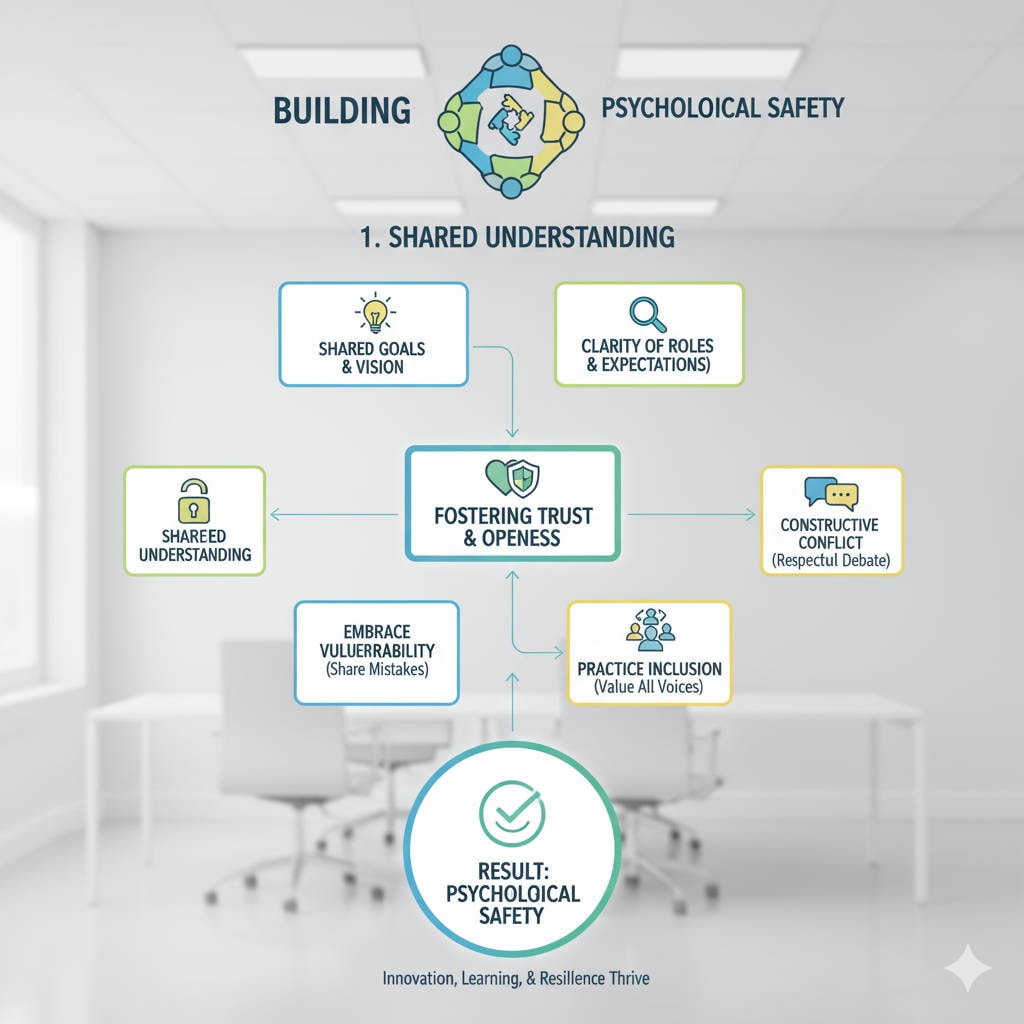
How to Build Psychological Safety in High-Performing Teams
Psychological safety is the foundation of a high-performing team. When individuals feel safe to contribute authentically, they’re more likely to share innovative ideas, admit mistakes, and voice concerns. Here’s how leaders can foster this environment:
- Anchor conversations in shared goals: Focus on the team’s purpose and how every voice contributes to success.
- Model vulnerability: Admit when you don’t have all the answers and encourage curiosity-driven discussions.
- Create inclusive rituals: Hold regular “lessons learned” sessions to normalize open dialogue.
- Welcome constructive conflict: Show your team that respectful disagreements lead to better outcomes.

Why Psychological Safety Matters for Leadership Success
Psychological safety isn’t just a “nice-to-have” for teams or saying “we must have it or else” (per the workplace psychological safety act) —it’s a critical driver of innovation, collaboration, and long-term success. Research shows that teams with high psychological safety are more likely to:
- Adapt to change and uncertainty.
- Innovate and experiment without fear of failure.
- Build trust and cohesion, even in high-pressure environments.
For leaders, fostering psychological safety is a powerful way to authentically unlock your team’s full potential and create a culture of trust, respect, and high performance.

FAQs
What is psychological safety and why does it matter in the workplace?
Psychological safety – a term coined by Harvard Business School’s Amy Edmondson – is the shared belief that team members can take interpersonal risks, like asking questions, admitting mistakes, or challenging ideas, without fear of humiliation or retaliation. It is not about avoiding discomfort or shielding people from accountability; it is about creating an environment where honest, open dialogue can thrive. Research consistently shows that teams with high psychological safety are more innovative, adaptable, and resilient – making it a critical driver of long-term organizational success.
Does psychological safety mean avoiding conflict and keeping everyone comfortable?
This is one of the most common misconceptions about psychological safety – and it is simply not true. True psychological safety actually encourages honesty, including constructive feedback and candid discussions about hard truths, because growth and innovation require them. The key distinction is between being nice, which avoids hard conversations, and being kind, which pairs honesty with respect – a balance that enables people to speak up without sacrificing accountability.
Does psychological safety mean every idea will be heard and implemented?
Psychological safety guarantees that team members feel safe sharing their ideas – but it does not guarantee that every idea will make the final cut. The real value lies in being heard, not being agreed with; even an idea that is not chosen can spark valuable discussion and lead to better collective decisions. Leaders can reinforce this by consistently acknowledging contributions and showing how specific ideas shaped the thinking process, even when they were not implemented directly.
Can a team have both psychological safety and high accountability?
Absolutely – and the most high-performing teams do exactly that. Psychological safety and accountability are not opposites; teams that feel safe admitting mistakes are actually more likely to learn quickly, adapt, and improve performance over time. Rather than lowering standards, psychological safety raises them by creating an environment where issues are addressed constructively instead of being hidden out of fear.
How can leaders practically build psychological safety in their teams?
Leaders can build psychological safety by anchoring team conversations in shared goals, modeling vulnerability by openly admitting when they do not have all the answers, and holding regular ‘lessons learned’ sessions to normalize open dialogue. Welcoming respectful disagreement and framing constructive conflict as a path to better outcomes also sends a powerful signal to the team. These consistent behaviors, practiced over time, shift team culture from one of self-protection to one of trust, honesty, and high performance.
Build the Team Culture That Drives Real Performance
Psychological safety doesn’t happen by accident, it’s built intentionally. Explore our Team Coaching programs to create a culture where your team thrives, or strengthen your foundation with our Leadership Training built around trust, accountability, and real performance. You can also learn more about coaching with Nick Tubach. We’d love to hear from you.
