

Effective leadership is built on trust, communication, and collaboration. However, fostering these qualities within a team can be challenging. One proven method for optimizing leadership communication and promoting a positive workplace culture is the Radical Candor framework. This approach equips leaders with actionable strategies to deliver honest feedback while maintaining meaningful relationships. Radical candor happens when leaders balance personal care with direct challenge, fostering effective feedback and organizational growth.
Radical Candor is not just a buzzword; it’s a powerful leadership tool grounded in balancing clear communication with genuine care. By implementing this feedback framework, executives can transform their company culture and inspire growth within their teams.
What is Radical Candor?
Developed by Kim Scott, a former executive at Google and Apple, Radical Candor is the ability to Care Personally while simultaneously Challenging Directly. It encourages leaders to give candid feedback without compromising empathy and respect. Unlike traditional approaches, Radical Candor focuses on open, honest communication that fosters mutual growth.
Scott challenges the classic advice, “If you don’t have anything nice to say, don’t say anything at all.” Radical Candor flips this notion by advocating for direct feedback as a means of helping others grow. It addresses the false dichotomy of being either harsh or incompetent, showing that one can care personally while providing honest feedback. At its core, Radical Candor is about honesty delivered with care, creating a work environment where both leaders and teams thrive.
Key Benefits of Radical Candor:
- Improves leadership communication.
- Builds trust and accountability.
- Promotes professional and personal growth.
- Fosters meaningful conversations that build trust and nurture both professional and personal growth.
The Difference Between Candor and Honesty
While both candor and honesty revolve around openness, they’re distinct concepts. Candor refers to being frank and expressive, while honesty pertains to truthfulness. Radical Candor merges both, encouraging leaders to be truthful while expressing thoughts in a way that is purposeful and constructive. Candor is a communication framework that enhances team relationships and performance.
Caring Personally as a Leader
Leadership isn’t limited to meeting objectives; it’s also about supporting the humans behind the work. Caring Personally is the first pillar of Radical Candor, requiring leaders to take a vested interest in their team members’ well-being. For instance:
- Check in with employees during challenging times to show empathy.
- Admit your mistakes to inspire trust and foster vulnerability.
Showing enough vulnerability, such as admitting personal struggles, is essential for building strong relationships and fostering a safe environment for open communication.
By demonstrating genuine concern, leaders create psychological safety, making it easier for teams to communicate openly and collaborate effectively.
Challenging Directly and Encouraging Growth
The second pillar, Challenging Directly, underscores the importance of honest communication. Sugarcoating feedback or avoiding tough conversations undermines trust and prevents professional growth. It is ultimately unhelpful as it prevents professional growth and undermines trust. Leaders practicing Radical Candor provide direct yet supportive feedback.
Example: Instead of saying, “Good effort!” when a submission misses the mark, a radically candid response would be, “I noticed these areas need improvement. How can I help ensure success moving forward?”
This approach balances clarity with compassion, turning potentially difficult conversations into opportunities for growth.
Understanding the Radical Candor Feedback Framework
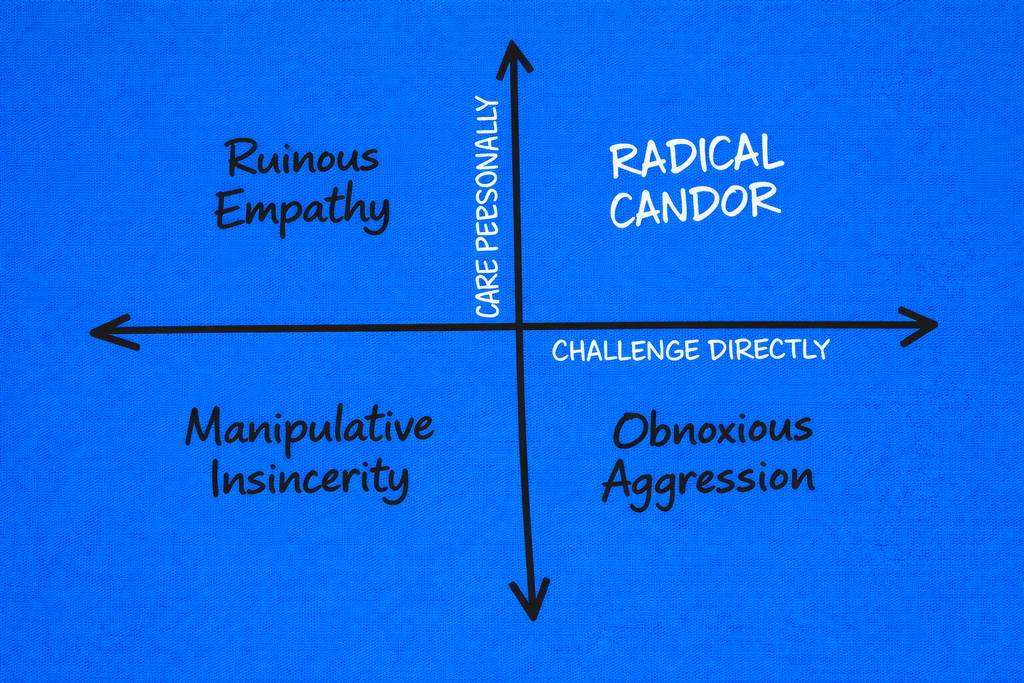
The Radical Candor model divides feedback styles into four quadrants, offering insight into common pitfalls and ideal practices:
- Ruinous EmpathyOccurs when leaders avoid offering constructive feedback to spare feelings. While intentions may be kind, this often prevents progress.
- Obnoxious AggressionFeedback is blunt and harsh, lacking care. Though direct, it alienates team members and erodes trust.
- Manipulative InsincerityCharacterized by superficial praise and behind-the-scenes criticism, this fosters toxicity within the workplace.
- Radical CandorThe balance between care and directness. Leaders deliver actionable feedback with empathy, strengthening relationships and enhancing performance. Radical candour balances directness with empathy, fostering psychological safety and improving communication.
Key Components of Radical Candor
The two key components of Radical Candor are caring personally and challenging directly. Caring personally means showing empathy and understanding towards the person you are communicating with, while challenging directly involves sharing your thoughts and opinions in a clear and respectful manner. This approach requires a delicate balance between being kind and being direct, and it’s essential to avoid falling into the traps of ruinous empathy, obnoxious aggression, or manipulative insincerity. By combining caring personally and challenging directly, leaders can create a safe and supportive environment where employees feel valued, heard, and empowered to grow.
How to Apply Radical Candor in Leadership:
- Solicit Feedback: Ask team members for honest input on your leadership style. Questions like, “What can I improve?” signal openness to constructive dialogue.
- Solicit Radically Candid Feedback: Emphasize the importance of soliciting radically candid feedback from team members to create an open environment and enhance the effectiveness of feedback. This can involve strategies such as public criticism and regular, small feedback sessions.
- Model Vulnerability: Accept responsibility for missteps to build trust and encourage transparency across the team.
- Give Specific Feedback: Avoid general statements. Instead, provide actionable insights with examples for clarity.
- Create a Culture of Feedback: Foster two-way communication, making feedback a normal part of team interactions.

Why Radical Candor is Essential for Executive Leadership
Executives who practice Radical Candor foster an open culture where team members feel valued, engaged, and supported. Understanding team members’ career goals strengthens relationships and accountability. This feedback model encourages innovation, accountability, and mutual respect—not just within teams but across entire organizations.
Key Outcomes of Radical Candor:
- Stronger trust between leaders and employees.
- More honest, productive conversations.
- Increased team engagement and motivation.
- Ensures valuable feedback is provided, fostering a culture of psychological safety and effective communication.
The Radical Candor Model in Action
Here’s how each quadrant of feedback can impact your team:
- Ruinous Empathy Example Saying, “It’s fine; don’t worry about your mistake,” misses the opportunity to address the issue constructively.
- Obnoxious Aggression Example “You’re incompetent for making this mistake,” damages morale and trust without offering solutions. This type of harsh criticism fails to provide constructive feedback and only demoralizes the team.
- Manipulative Insincerity Example“Great effort!” to their face but discussing the error negatively with others only breeds distrust.
- Radical Candor Example“I noticed an error in your report. Here’s what went wrong, and here’s how we can resolve it together. I know you can do better,” demonstrates care and clarity.
Building a Radically Candid Culture
Establishing a culture of Radical Candor starts with creating safe spaces for feedback. Leaders must actively demonstrate the principles of caring personally and challenging directly to make candid communication the norm. Changing training requires significant effort as it involves altering deeply ingrained communication styles. Key strategies include:
1. Sharing Stories
Use personal experiences to highlight the value of Radical Candor, offering relatable examples to inspire your team. When sharing these stories, include specific praise to highlight concrete examples of positive performance.
2. Soliciting Feedback
Make it easy for employees to share input, such as suggestion boxes or anonymous forms. Soliciting feedback from direct reports is essential for creating an open environment and enhancing communication. Over time, normalize direct dialogue.
3. Career Conversations
Invest in understanding your employees’ aspirations through structured conversations. Clear feedback helps a person understand their strengths and areas for improvement. Collaborate on actionable career pathways.
4. Offering Guidance
Balance recognition with constructive feedback. Be specific about what’s working and what can improve. Guidance should be specific and sincere to ensure effective communication and personal growth.
5. Continuous Assessment
Regularly evaluate your leadership practices to ensure you’re applying the Radical Candor principles effectively. Practicing compassionate candor often feels unnatural as it challenges ingrained societal norms that discourage blunt communication.
How Radical Candor Drives Results
Radical Candor isn’t just a communication style; it’s a framework that powers organizational success. By nurturing a culture rooted in openness, honesty, and empathy, leaders create an environment for innovation and excellence.
Benefits for Leaders and Teams:
- Improved collaboration through clearer communication.
- Enhanced employee morale and accountability.
- Greater alignment with company goals and vision.
- Helps build strong relationships through personal care and vulnerability.
Leaders who implement Radical Candor build stronger relationships, foster trust, and drive meaningful results for their organizations.
Best Practices for Radical Candor
To practice Radical Candor effectively, leaders should follow several best practices. First, they should prioritize building strong relationships with their team members, based on trust, empathy, and mutual respect. This involves being approachable, transparent, and vulnerable, and creating a safe space for open and honest communication. Second, leaders should focus on giving and receiving feedback that is specific, sincere, and timely, and that balances kindness and directness. Third, they should encourage candid conversations and create opportunities for team members to share their thoughts and opinions, without fear of judgment or retribution. By following these best practices, leaders can create a culture of Radical Candor that fosters growth, innovation, and success.
Overcoming Challenges to Radical Candor
Implementing Radical Candor can be challenging, especially in organizations with a history of toxic communication or a culture of fear. One of the main challenges is overcoming the fear of giving or receiving honest feedback, which can be perceived as brutal honesty or front-stabbing. However, Radical Candor is not about being mean-spirited or aggressive, but about being clear, direct, and respectful. Another challenge is avoiding the pitfalls of ruinous empathy, obnoxious aggression, or manipulative insincerity, which can undermine trust and damage relationships. To overcome these challenges, leaders should prioritize building strong relationships, focus on giving and receiving feedback, and create a safe and supportive environment that encourages open and honest communication.
Conclusion
Radical Candor is a powerful tool for building strong, effective relationships and creating a culture of openness, honesty, and mutual respect. By caring personally and challenging directly, leaders can create a safe and supportive environment that fosters growth, innovation, and success. While implementing Radical Candor can be challenging, the benefits are well worth the effort. By prioritizing building strong relationships, focusing on giving and receiving feedback, and creating a culture of candid conversations, leaders can overcome the challenges and create a workplace where employees feel valued, heard, and empowered to thrive. Ultimately, Radical Candor is not just a communication framework, but a way of being that can transform organizations and help them achieve their full potential.

FAQs
What is Radical Candor in leadership?
Radical Candor is a leadership communication framework that emphasizes caring personally while challenging directly. It means giving honest, clear feedback while also showing genuine concern for the person receiving it.
In practice, Radical Candor helps leaders avoid being either overly harsh or overly passive. Instead of sugarcoating issues or avoiding difficult conversations, leaders address problems directly—but in a way that supports growth and maintains trust. This balance creates stronger relationships, improves performance, and fosters a culture of open communication.
What are the 4 quadrants of Radical Candor?
The Radical Candor model is divided into four quadrants based on how leaders balance care and directness:
– Radical Candor: High care + high directness (ideal approach)
– Ruinous Empathy: High care + low directness (avoiding feedback to spare feelings)
– Obnoxious Aggression: Low care + high directness (harsh, blunt criticism)
– Manipulative Insincerity: Low care + low directness (dishonest or political behavior)
Understanding these quadrants helps leaders identify their communication style and adjust toward Radical Candor, where feedback is both honest and supportive.
Why is Radical Candor important for leaders?
Radical Candor is important because it builds trust, improves communication, and drives better team performance. When leaders are both honest and supportive, employees feel valued while also receiving the guidance they need to improve.
Without Radical Candor, teams often fall into common traps—either avoiding feedback altogether or delivering it in a way that damages morale. By practicing Radical Candor, leaders create an environment where feedback is expected, respected, and used as a tool for growth rather than criticism.
What is an example of Radical Candor?
An example of Radical Candor is giving direct feedback while offering support for improvement. For instance, instead of saying, “Great job” when work needs improvement, a leader might say:
“I noticed a few areas in this report that need refinement. Let’s walk through them together so you can strengthen it for next time.”
This approach is clear and honest, but also collaborative and encouraging. It helps the employee understand what needs to change without feeling discouraged or attacked.
How do you practice Radical Candor at work?
Practicing Radical Candor involves consistently balancing honesty with empathy in everyday interactions. Leaders can apply it by:
– Giving specific, actionable feedback instead of vague comments
– Addressing issues promptly rather than avoiding them
– Asking for feedback from their team to model openness
– Showing genuine interest in employees’ goals and well-being
Over time, these behaviors create a culture where feedback is normal, conversations are productive, and employees feel both supported and challenged.
What is the difference between Radical Candor and brutal honesty?
Radical Candor and brutal honesty are not the same. Brutal honesty focuses on directness without regard for how the message is received, often leading to hurt feelings or damaged relationships.
Radical Candor, on the other hand, combines direct feedback with genuine care. The goal is not just to be honest, but to be helpful. Leaders practicing Radical Candor consider both what they say and how they say it, ensuring feedback leads to improvement rather than defensiveness.
Start Your Leadership Transformation
Radical Candor has the power to reshape how you lead, communicate, and inspire growth among your team. By practicing its principles, you’ll establish a culture of trust, accountability, and engagement. The radical candor framework is effective in guiding leaders to engage in honest and open conversations while caring for team members personally.
If you’re ready to bring Radical Candor into your leadership strategy, explore the trusted services at Bridgeline Executive Coaching. Bridgeline offers executive leadership coaching and resources tailored to help leaders unlock their full potential, including coaching support from Nick Tubach.
Contact us today to begin your transformation into a radically candid leader.
