


Your days are so busy that sometimes you wonder where the time went. You want to be the best for your team, for your family, and for yourself. Yet there is a whole lot coming at you every day, especially in these constantly changing and uncertain times. Leaders in challenging times need to be able to ask themselves powerful questions that will help them stay on track and achieve success. Start by asking yourself different questions that will power your day and not derail it. Discover 5 essentials for leaders in uncertain times.

(1) Remember What Matters Most
When we get caught up in the day-to-day grind, it can be easy to forget what matters most. We get wrapped up in our own little world and lose sight of the bigger picture. But if we take a step back and remember our core values, we can refocus our attention on what’s truly important, and approach each day with a broader perspective. We can ask ourselves not only what we want to achieve today, but also how our actions will impact the world around us. When we play it forward to the end of the day, we can make sure that we’re proud of what we’ve accomplished. And at the end of the day, when our head is finally hitting the pillow, we can rest assured knowing that we’ve made a positive difference.
(2) Be Mindfully Present
To succeed, you need to take a step back and look at the situation from a more holistic or systemic perspective. However, it’s also important to be present and engaged with those around you. The key is to find the right balance.
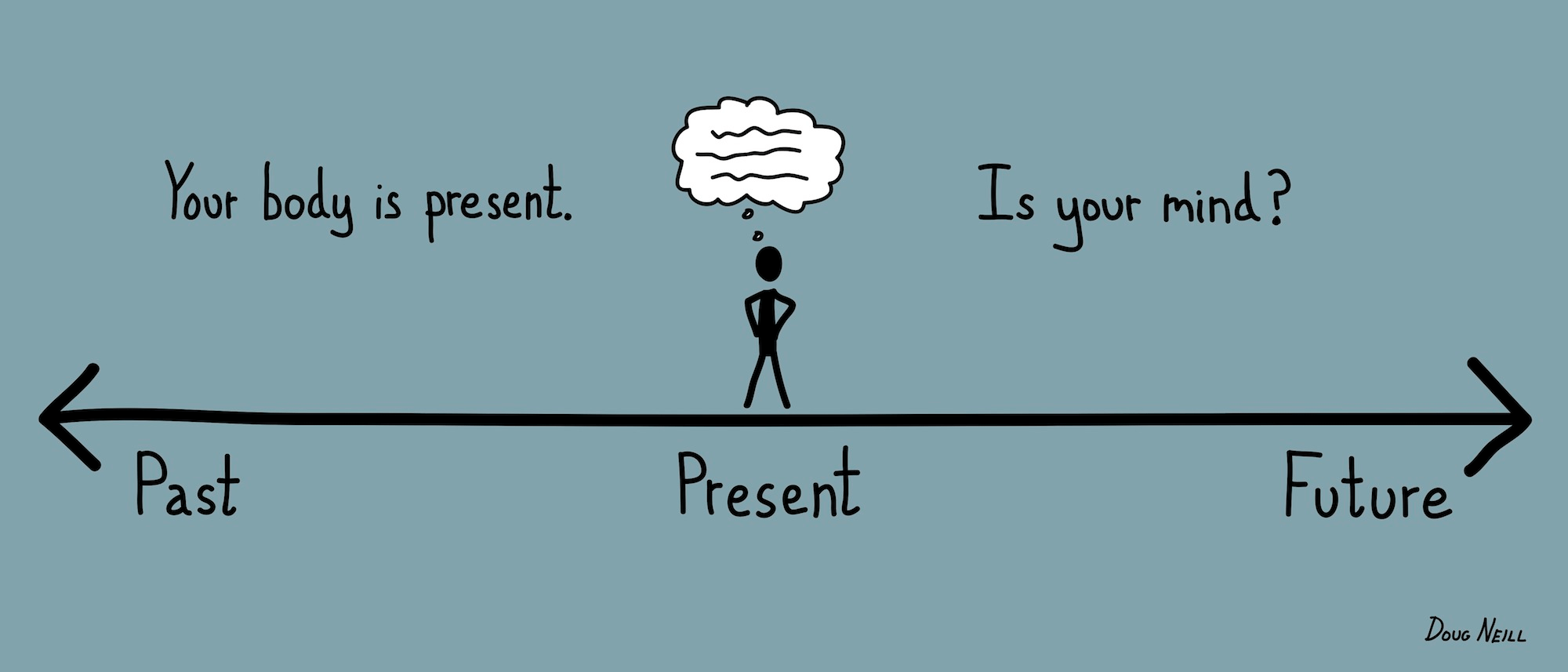
By being more present, you’ll not only reduce stress but also be better able to relate to and connect with those around you. This is an essential core value for any leader or leadership team. So take a moment to ground yourself and be present in the moment. You’ll be glad you did.
(3) Focus Your Attention on What you can Control
It’s easy to get bogged down by everything that’s happening around us that we can’t control. But, as effective leaders, it’s important to focus on what we can manage and create opportunities for ourselves and others, even in the most challenging of times. As the saying goes, “God, grant me the serenity to accept the things I cannot change, courage to change the things I can, and wisdom to know the difference.” By focusing on what we can control and taking action accordingly, we enable ourselves and others to thrive in spite of whatever else is going on in the world. So next time you’re feeling overwhelmed, remember to take a step back and focus on what is within your sphere of influence. You might be surprised at how much difference it makes.

(4) Focus Your Feelings
It can be difficult to keep your focus when you are feeling down, but it is important to remember that you can always choose how you want to feel. First, notice what emotion you are feeling and name it. This will help you to avoid stuffing and ignoring your feelings. It is also important to give yourself some self-compassion in the moment, as life is hard and most people in your situation would be feeling the same way. Once you have acknowledged your feelings, think about how you would want to feel instead and what you can do toward that. To help yourself stay focused on what matters most, practice gratitude. Be grateful for the small things in life, as this will change your brain chemistry in a good way. Remember that you always have the power to choose how you want to feel, even in the most difficult of situations. By focusing and redirecting your feelings, you can increase your effectiveness and better navigate short-term challenges.
(5) Ask Better Questions Today
- WHO – Who matters most to me today? What conversations do I want to have with them? What interactions do I want to have with them? How can I express appreciation or kindness to them today?
- HOW – How do I want to show up to my day and my interactions? As the stressed, hurried, curt, not present leader? Or as the engaged, connected, focused leader? You get to choose this every day.
- WHAT – What’s one next step I can take? I can’t do it all today, but I can make progress today toward what matters most.
Asking these questions will change your day, for good. You’ll have a better day and a better tomorrow. What’s one next thing you can do?
FAQs
What are the five essentials for leaders navigating uncertain times?
The article outlines five core practices that help leaders stay grounded, effective, and purposeful during periods of change and uncertainty: remembering what matters most by reconnecting with core values to maintain a broader perspective; being mindfully present to reduce stress and strengthen connection with those around you; focusing your attention on what you can control rather than being consumed by what you cannot; focusing your feelings by acknowledging emotions honestly and redirecting them intentionally; and asking better questions each day – specifically around who matters most, how you want to show up, and what one next step you can take. These five practices are not crisis-management tactics but daily disciplines that compound over time, building the kind of leadership resilience that makes uncertainty navigable rather than paralyzing. Together they shift a leader’s orientation from reactive to intentional, which is where real leadership effectiveness lives.
How can leaders stay grounded in their core values during times of uncertainty and change?
The article’s first essential is remembering what matters most – specifically, using your core values as a daily anchor that keeps you oriented toward impact and purpose even when external circumstances are chaotic and beyond your control. A practical way to apply this is to play the day forward at the start of each morning, asking not just what you want to accomplish but how you want your actions to affect the people around you – and then checking at the end of the day whether you can feel proud of what you did. This values-grounded approach prevents the reactive narrowing of focus that uncertainty typically causes, and keeps leaders operating from intention rather than anxiety.
Why is focusing on what you can control one of the most important leadership skills during a crisis?
In uncertain and rapidly changing environments, leaders who fixate on what they cannot control – external market forces, organizational decisions above their level, global events – quickly become overwhelmed, reactive, and ineffective, which erodes both their own performance and their team’s confidence. The article’s third essential redirects that energy toward the leader’s actual sphere of influence: the decisions they make, the culture they model, the support they provide, and the opportunities they create for their team despite external turbulence. This shift from a helplessness orientation to a control orientation is one of the most powerful and researchable predictors of leadership effectiveness under stress, and it is also one of the most teachable – which is why it is a central focus of executive coaching during crisis periods.
How should leaders handle their emotions during difficult or uncertain times?
The article’s fourth essential reframes emotional management not as suppression but as intentional redirection – starting with noticing and naming the emotion you are feeling, which prevents the kind of stuffing and ignoring that typically causes emotions to surface in unproductive ways at the worst possible moments. From there, the practice involves offering yourself self-compassion rather than judgment, because most people in a genuinely difficult leadership situation would feel the same way, and then consciously choosing how you want to feel instead and identifying one small action that moves you in that direction. Practicing gratitude as a daily habit is also highlighted as a concrete tool for emotional redirection, because it has a measurable positive effect on brain chemistry and shifts attention from what is lacking or threatening to what is still present and good.
What kinds of questions should leaders ask themselves daily to lead more effectively?
The article’s fifth essential provides a three-part daily reflection framework built around three questions: Who – who matters most to me today, what conversations do I want to have with them, and how can I express appreciation or kindness to them? How – how do I want to show up today, as the stressed and distracted leader or as the engaged and present one, recognizing that this is a daily choice? What – what is one next step I can take today toward what matters most, accepting that progress rather than completion is the realistic and worthy goal. These questions are deliberately simple and quick to engage with, because the article’s philosophy is that leadership effectiveness during uncertainty is built not through grand strategy but through the accumulation of small, intentional daily choices that keep a leader aligned with their values and connected to the people they serve.
Prepare Your Leaders to Perform Under Any Conditions
Uncertain times don’t wait for you to feel ready, but the right support makes all the difference. Work with a Bridgeline Executive Coach to develop the clarity, resilience, and intentionality that help you lead well when everything around you is shifting, or learn more about coaching with Wende Gaikema. You can also explore our Leadership Training to equip your whole team to navigate change with confidence.
For related reading, explore our articles on Leadership Resilience, Reflection for Leaders, and effective leadership. Let’s figure out the right next step together.
