


When done right, giving and receiving feedback is one of the most powerful tools for driving performance, nurturing talent, and fostering growth within an organization. The Situation-Behavior-Impact (SBI) feedback model is a proven framework developed by the Center for Creative Leadership to help leaders structure clear, objective, and actionable feedback conversations. But like any tool, it can be misapplied, leading to confusion, mistrust, or missed development opportunities.
This blog explores the SBI feedback model, highlighting its key components, common pitfalls to avoid, and best practices for effective implementation. By the end, you’ll have the tools to elevate your feedback conversations and drive meaningful outcomes for your team.
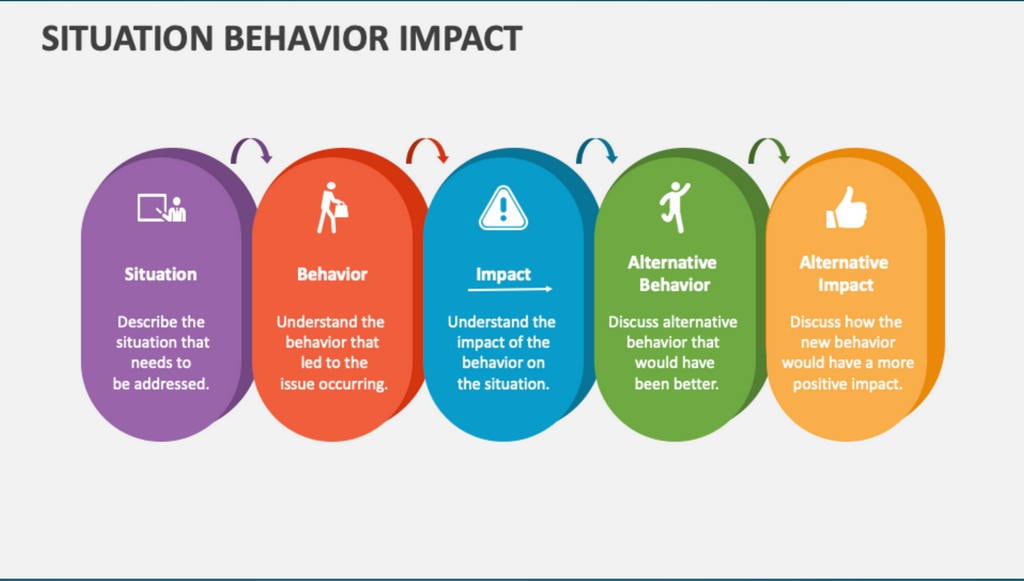
What is the SBI Feedback Model?
The SBI Feedback Model is a simple yet effective framework for structuring feedback. It focuses on three elements to ensure clarity and reduce emotions or defensiveness during feedback conversations:
1. Situation
Describe the specific situation in which a person’s behavior occurred. Mention the time, location, and context to reduce ambiguity.
Example:
“During this morning’s team meeting…”
2. Behavior
Focus on observable actions and steer clear of opinions, judgments, or assumptions. Keep it factual.
Example:
“…you interrupted the discussion several times while your colleagues presented their project updates.”
3. Impact
Explain the consequences of the behavior. Highlight how it affected the team, project, or individual to emphasize its significance.
Example:
“…which disrupted the flow of the discussion and made it hard for others to express their ideas.”
By breaking feedback into these three steps, the SBI model ensures that communication stays focused on actions and their results, rather than personality traits or subjective interpretations.
Origins
The Center for Creative Leadership introduced the SBI framework to help leaders have more constructive feedback conversations. It is widely recognized for minimizing defensiveness and fostering growth by encouraging reflection on specific behaviors.
While the framework is versatile enough for both positive and negative feedback, its success depends on how it’s used.
Common Pitfalls to Avoid When Using SBI Feedback
Even with a strong framework, feedback can go awry if mishandled. Here are the most common pitfalls and how to avoid them:
1. Vague or General Feedback
Problem
Vague feedback leaves recipients unsure of what they did wrong (or right). For example, telling someone, “Great job on this project,” doesn’t provide actionable insights into what made their performance great. Similarly, “You need to improve with clients” is too broad to inspire meaningful change. Note that this technique is equally beneficial and effective when giving positive feedback.
Solution
Be specific. Provide details about the situation, behavior, and impact. Specificity not only builds clarity but also fosters trust and credibility.
Examples (Vague vs. Specific):
- Vague (Developmental) Feedback: “Your presentation could have been better.”
- Specific (Developmental) Feedback (SBI): “During yesterday’s client pitch, some of your slides weren’t aligned with the messaging, which caused the client to ask for clarification several times. This created confusion and slowed down the discussion.”
- Vague (Developmental) Feedback Example: “You need to communicate better with the team.”
- Specific (Developmental) Feedback: “I noticed there were a few miscommunications during this week’s project. Focusing on providing more frequent updates, especially on your deadlines, could help keep the entire team aligned.”
- Vague (Positive) Feedback: “Good job on the project.”
- Specific (Positive) Feedback: “You did an excellent job on the project by clearly organizing the data and presenting it in a way that was easy for the entire team to understand. Your attention to detail significantly contributed to our decision-making process.”
- Vague (Positive) Feedback Example: “You’re doing great work.”
- Effective Feedback (Positive): “You’re doing great work with client relations. For example, your personalized approach during our last client meeting really built trust and helped solidify their confidence in our partnership.”
Effective feedback not only provides clear recommendations but also acknowledges and reinforces positive actions, encouraging continued excellence.
2. Focusing on Personality, Not Behavior
Problem
Making comments about someone’s personality or character instead of their actions can feel like a personal attack, increasing defensiveness and damaging trust. For example, saying, “You’re lazy” alienates the recipient without providing a pathway for improvement.
Solution
Focus on observable actions, not generalized traits or assumptions about intent.
Example (Personality vs. Observable Behavior):
- Personality-Based Feedback: “You’re unreliable.”
- Behavior-Based Feedback (SBI): “When you didn’t deliver the report by the deadline last Friday, the team members had to work late to meet the client’s expectations. This delayed the project’s progress.”
3. Ignoring the Situation
Problem
Failing to provide context limits the recipient’s ability to connect the feedback to specific moments. Without situational details, feedback can feel irrelevant or confusing.
Solution
Always begin with the situation. Clearly describe when and where the behavior occurred to ensure the recipient understands the reference point.
Example (Without Situation): “You spoke too quickly.”
Example with SBI: “During yesterday’s team presentation at 3 pm, you spoke very quickly, which made it hard for the audience to follow your points.”
4. Neglecting the Impact
Problem
Leaving out the impact can reduce the significance of the feedback. The recipient may not understand the reason for course correction or feel motivated to change.
Solution
Connect the behavior to its broader consequences. Show how it affects the team, project, or customer.
Example (Missing Impact): “You were late to the meeting again.”
Example with SBI: “When you arrived 15 minutes late to today’s 10 am team meeting, the discussion ended up running overtime, delaying everyone’s schedule.”
5. Not Addressing Intent (SBII Model)
Problem
Assumptions about intent often create misunderstandings. Without asking clarifying questions, you may misinterpret the reason for someone’s behavior.
Solution
Expand the SBI model by adding intent to create the SBII model. Ask questions like, “What were you hoping to achieve?” to uncover the motivation behind actions. This fosters a two-way dialogue and builds trust.
Example for SBII Conversation:
- Situation: “During Monday’s strategy meeting, I noticed…”
- Behavior: “…you interrupted Sarah several times while she was presenting.”
- Impact: “…which made it harder for her to complete her points and disrupted the discussion.”
- Intent: “Could you share what you were trying to achieve by interjecting?”
6. Lack of Follow-Up
Problem
Feedback without follow-up risks fading into the background. Without reinforcement, employees may forget the conversation or fail to sustain new behaviors.
Solution
Schedule follow-ups to discuss progress. Reiterating positive behaviors or addressing ongoing challenges helps reinforce growth and accountability.
Example:
“Since our last conversation, I’ve noticed improvement in how you’ve been handling client communications. Great work! Is there anything else I can do to support you?”
Best Practices for Using the SBI Feedback Model
To maximize the benefits of the SBI feedback model, consider these best practices:
- Be Specific. Provide clear and actionable details.
- Focus on Behavior. Avoid personal judgments and stick to observable actions.
- Set the Scene. Always describe the situation to ensure clarity.
- Explain Impact Clearly. Highlight the broader consequences of behaviors.
- Ask About Intent. Use the SBII model for a two-way dialogue.
- Follow Up. Reinforce feedback to sustain behavior change.
Benefits of Using the SBI Model Correctly
When implemented effectively, the SBI feedback model offers tremendous benefits for both leaders and employees:
- Improved Motivation. Feedback clarifies what employees are doing well, boosting confidence and satisfaction.
- Enhanced Trust. Honest, specific feedback fosters stronger relationships between managers and their teams.
- Greater Clarity. Structured feedback removes guesswork and helps employees understand expectations.
- Effective Behavior Change. When feedback focuses on specific actions and their impact, it’s easier for employees to adjust and grow.

Drive Results through Effective Feedback
Feedback is more than just an HR best practice; it’s a vital leadership skill that drives growth, engagement, and results. The SBI feedback model provides a structured, objective framework to help leaders deliver feedback that inspires change and clarifies expectations.
By avoiding common pitfalls, following best practices, and building trust through dialogue, leaders can unlock the full potential of their teams and create a culture of continuous improvement.
Start using the SBI feedback model today to transform your feedback conversations and nurture talent within your organization.
Further Reading
For additional perspectives on the effectiveness of feedback models, check out the following links to Harvard Business Review’s research and articles on feedback and performance enhancement.
Performance Reviews That Actually Motivate Employees
Negative Feedback Rarely Leads to Improvement
Why Feedback Can Make Work More Meaningful
FAQs
What is the SBI Feedback Model and where did it come from?
The SBI Feedback Model – which stands for Situation, Behavior, and Impact – is a structured framework developed by the Center for Creative Leadership to help leaders deliver clear, objective, and actionable feedback. It works by breaking feedback into three steps: describing the specific situation in which a behavior occurred, identifying the observable behavior itself, and explaining the concrete impact that behavior had on the team or project. This structure keeps feedback focused on actions and outcomes rather than personality traits, significantly reducing defensiveness and making it easier for the recipient to understand and act on the feedback.
What is the most common mistake leaders make when giving feedback?
The most common mistake is giving vague or general feedback – phrases like ‘great job’ or ‘you need to improve with clients’ sound helpful but give the recipient nothing specific to act on. Without a clear situation, behavior, and impact, feedback loses its power to drive real change and can actually erode trust rather than build it. The SBI model directly solves this by requiring leaders to anchor every piece of feedback in a specific moment, a specific action, and a specific consequence.
What is the difference between the SBI model and the SBII model?
The SBI model covers three elements: Situation, Behavior, and Impact while the SBII model adds a fourth step: Intent. After describing the impact, the SBII model prompts the leader to ask a question like ‘What were you hoping to achieve?’ before drawing conclusions about why the behavior occurred. This additional step transforms feedback from a one-way evaluation into a two-way dialogue, reducing the risk of misinterpretation and building the kind of trust that makes feedback genuinely effective.
Why is focusing on behavior instead of personality so important in feedback?
When feedback targets a personality saying ‘you’re unreliable’ rather than describing a specific missed deadline and its consequences it feels like a personal attack, which immediately triggers defensiveness and shuts down productive dialogue. Behavior-based feedback, by contrast, gives the recipient a clear and actionable target: a specific action they can choose to repeat or change. Keeping feedback grounded in observable behaviors rather than character judgments is what makes the SBI model so effective at fostering growth without damaging the professional relationship.
Why is follow-up essential after giving SBI feedback?
Feedback without follow-up risks fading into the background – without reinforcement, employees may lose momentum or revert to old habits before the new behavior has a chance to stick. Scheduling a follow-up conversation to acknowledge progress, address ongoing challenges, and reaffirm expectations closes the loop and signals that the feedback was genuinely about growth, not just a one-time correction. This consistent follow-through is what transforms a single feedback conversation into a lasting behavior change and a stronger professional relationship.
Create a Feedback Culture That Accelerates Growth
Great feedback is a leadership skill, and it can be learned. Explore our Leadership Training to build a feedback-driven culture across your team, or work on it 1:1 through Executive Coaching tailored to your growth. You can also learn more about coaching with Nick Tubach. Start a conversation with us today.
