Building a cohesive team is more than assembling talented professionals; it’s about nurturing an environment where collaboration thrives and collective success becomes achievable. Team development doesn’t happen overnight—achieving a high-performing, high-functioning team requires intentional focus on specific behaviors that drive collaboration and trust. Here, we explore the five behaviors of a cohesive team (based on Patrick Lencino’s “5 Dysfunctions of a Team”, renamed for “Five Behaviors of a Cohesive Team”), how these concepts can help teams achieve collective results, some examples and strategies for each of the five factors.
Cohesive Team
A cohesive team operates as a unified force where members share a clear vision, common goals, and mutual trust. Effective teams can debate ideas openly, resolve conflicts constructively, and support each other through challenges. Patrick Lencioni’s model, The Five Dysfunctions of a Team, introduced the foundational idea of vulnerability-based trust as a key element in team success. Without a strong base of trust, even the most skilled professionals can fail to operate cohesively.
The cohesive team model emphasizes the importance of building genuinely transparent relationships where team members can express their opinions openly. This transparency allows intact teams to spot potential challenges early, creating opportunities for growth while steering clear of destructive conflict.
Behaviors of a Cohesive Team
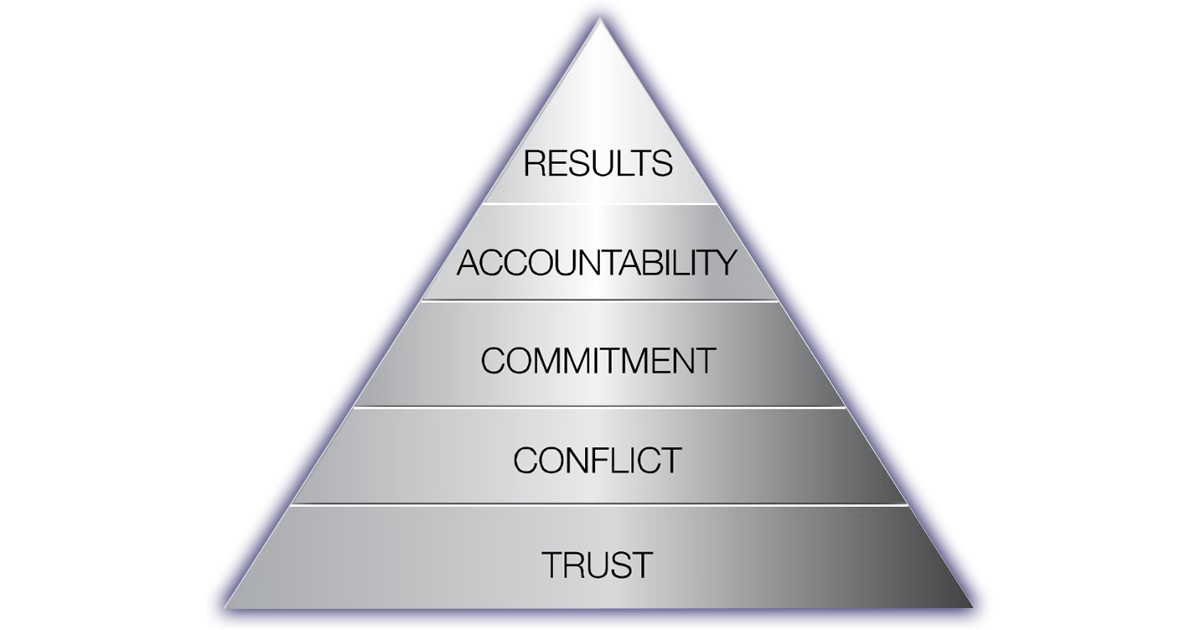
The five behaviors model outlines critical habits every team must develop to operate as a high-functioning unit. These behaviors include establishing trust, engaging in productive conflict, committing to decisions, holding each other accountable, and focusing on results. Each behavior builds on the others, forming the backbone of authentic team development solutions.
Trust Vulnerability-based trust is the foundation of a cohesive team. When team members feel comfortable being genuinely transparent—admitting mistakes, asking for help, or offering opinions—they improve collaboration and mutual respect.Example: A leader who candidly shares their own challenges sets the tone for others to do the same, fostering openness and collaboration.Actionable Strategies
Introduce team-building activities focused on sharing personal stories or experiences.Promote transparency by encouraging leaders to admit mistakes and discuss areas of growth.Utilize tools like personality assessments to deepen understanding between team members.
By building trust, teams can dismantle silos and form genuine connections that enhance organizational success.
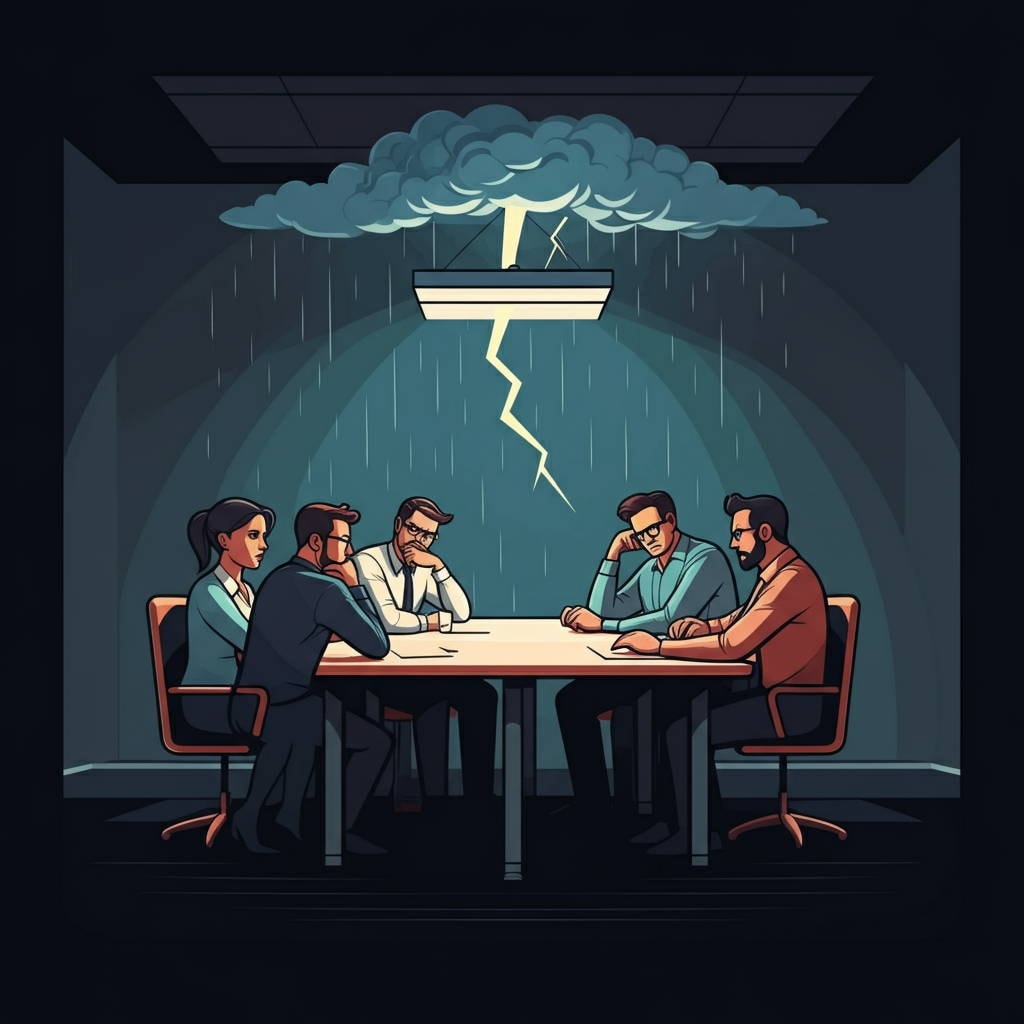
Constructive Conflict Teams cannot avoid conflict altogether. However, fostering productive conflict allows members to engage in healthy debates, consider diverse perspectives, and explore solutions critically. Unlike destructive conflict, which fractures relationships, constructive debate strengthens bonds and leads to innovative ideas. Example: High-performing teams encourage differing opinions and welcome difficult conversations to explore innovative solutions.Actionable Strategies
Set ground rules for respectful debates during team discussions.
Encourage leaders to model healthy conflict by inviting dissenting perspectives.
Create a culture where disagreements are seen as an opportunity to improve outcomes rather than a threat.
Commitment Alignment around common goals ensures a team remains focused on shared objectives. Clarity and agreement during decision-making encourage every member to move forward confidently, even when individual preferences differ.Example: A sports team may differ on strategies but align on execution once a play is chosen, ensuring everyone works toward the same objective.Actionable Strategies
End key meetings by clearly stating the decisions made and confirming team members’ commitment.Develop a shared vision by tying decisions to overarching organizational goals.Ensure all voices are heard during meetings to strengthen engagement.
Clear and demonstrated commitment empowers staff to move forward with confidence and focus on achieving team-wide success.
Accountability High-performing teams stay accountable to one another. Accountability includes checking progress reports, addressing unmet commitments, and maintaining alignment with agreed deliverables.Example: Cohesive teams that practice peer accountability encourage members to provide constructive feedback and address concerns directly.Actionable Strategies
Build a framework for regular peer feedback and performance reviews.Set measurable objectives and assign clear ownership for tasks.Celebrate shared achievements while addressing gaps as learning opportunities.
A culture of accountability ensures teams prioritize collective success and improve team dynamics consistently over time.
Achieving Results The ultimate goal of any team building process is to achieve collective results. While individual achievements matter, the cohesive team model prioritizes team-wide success. When teams focus on the big picture, their competitive advantage grows exponentially.Example: A leadership team with predefined, measurable KPIs can actively track progress and align individual contributions to group objectives.Actionable Strategies
Establish clear, collective goals at the outset of every project.Regularly review progress toward key performance indicators (KPIs).Reinforce the importance of team success over individual achievements in regular communications.
Shifting attention to shared results motivates teams to align their efforts, driving measurable organizational success.
Behaviors Assessment
Understanding where a team stands is essential to progress. Adding structured behaviors assessments—such as the Five Behaviors Assessment—can help intact teams gauge their cohesion levels, uncover blind spots, and identify opportunities for personal development. These assessments provide leaders with actionable feedback to tailor efforts and align strategies with the team’s goals.
All assessments should include discussions about progress reports, emphasizing the importance of accountability in reaching milestones. Regular evaluations also ensure that short-term corrections lead to long-term success—a vital part of better teamwork.
When teams focus on the five key behaviors—trust, conflict, commitment, accountability, and results—they create a foundation for sustainable growth. The ultimate goal is not only to achieve shared results but also to solidify a competitive advantage that enables the team to excel in a constantly evolving environment.
By implementing these behaviors and continuously refining them through feedback and assessments, teams can transform into dynamic units that deliver results beyond expectations. Better teamwork isn’t just a goal; it’s a process that leads to enduring success.
Bridgeline Executive Coaching and Leadership Development offers specialized workshops (The 5 Behaviors of Successful Teams) designed to help teams address these dysfunctions head-on. These workshops include behavioral assessments for the team, and we guide you through hands-on, experiential exercises to build trust and refine alignment, which play a crucial role in achieving extraordinary results. The ultimate measure of your success will be your organization’s transformation.
Contact us to explore if this workshop is right for you.
FAQs
What are the 5 behaviors of a cohesive team based on Patrick Lencioni’s model?
The five behaviors of a cohesive team – based on Patrick Lencioni’s foundational model ‘The Five Dysfunctions of a Team’ – are trust, constructive conflict, commitment, accountability, and results. Each behavior builds directly on the one before it, forming a pyramid structure where vulnerability-based trust is the foundation and collective results are the ultimate goal. Without each behavior in place, even the most talented teams can fail to operate cohesively, because the absence of any single layer undermines the entire structure above it.
Why is vulnerability-based trust the foundation of a high-performing team?
Vulnerability-based trust – the kind where team members feel genuinely safe admitting mistakes, asking for help, and sharing honest opinions – is the foundation of team cohesion because without it, every other team behavior breaks down. When trust is absent, people protect themselves rather than collaborate, conflicts become personal rather than productive, and commitment to shared decisions remains surface-level at best. Leaders who model vulnerability by openly sharing their own challenges set the tone for the entire team, making it safe for others to do the same and creating the transparency that high performance actually requires.
What is the difference between constructive conflict and destructive conflict in teams?
Constructive conflict is a healthy, debate-driven process where team members openly challenge ideas, consider diverse perspectives, and push toward better solutions – all while maintaining mutual respect and shared purpose. Destructive conflict, by contrast, becomes personal, fractures relationships, and creates an environment where people avoid speaking up rather than risk the fallout. The article makes clear that high-performing teams do not avoid conflict – they set ground rules for respectful debate, invite dissenting perspectives, and treat disagreement as an opportunity to improve outcomes rather than a threat to be suppressed.
How do teams build a culture of accountability without creating a blame-based environment?
Peer accountability – where team members hold each other to agreed commitments rather than waiting for a manager to intervene – is one of the most powerful drivers of high team performance, but it only works in an environment where trust and constructive conflict are already established. The article outlines a practical framework: setting measurable objectives with clear ownership, building regular peer feedback and progress reviews into team routines, and treating gaps in performance as learning opportunities rather than failures to punish. When accountability is grounded in shared goals and mutual respect rather than hierarchy, it strengthens team bonds rather than damaging them.
How does focusing on collective results rather than individual achievements improve team performance?
When team members prioritize individual recognition over shared outcomes, the team’s overall performance suffers – because energy gets directed toward personal visibility rather than the collective goal. The five behaviors model makes collective results the top of the pyramid deliberately, signaling that all the work of building trust, navigating conflict, committing to decisions, and holding each other accountable exists to serve one purpose: achieving what the team can only accomplish together. Organizations that reinforce team-wide success through shared KPIs, regular progress reviews, and recognition of group achievements – rather than just individual wins – consistently build stronger competitive advantage and more sustainable high performance.
Our ability to effectively engage others is greatly impacted by our understanding of each other's needs, intent, reasoning, etc. We cannot read minds, yet our behavior often seems to suggest otherwise. Mind reading is a cognitive distortion, which significantly...
All great leaders have several things in common. They have a clear vision of what they want to achieve and they can communicate that vision to others in a way that inspires them to action. Effective leaders must also become master motivators, able to galvanize their...
The art of conversation isn't about impressing others, but rather connecting with them on a deeper level. Conversation is an art form, one that can be difficult to master. To have a successful conversation, it has to be mutually engaging and rewarding. We must be able...
As a leadership and executive coach, I often emphasize the critical role of psychological safety in fostering high-performing teams and effective leadership. Psychological safety, a concept widely recognized and researched, is pivotal in creating environments where...